How Bad Are My Varicose Veins and When Should They Be Treated?
Many patients arrive at The Vein Clinic Swindon with the question, "How Bad Are My Varicose Veins and When Should They Be Treated?" They say, “I bet you’ve seen people with worse veins than me.” It is a natural instinct to compare yourself to others, especially when the problem is visible. Some people assume their veins are too small to matter. Others believe that unless the veins are huge or painful, they are not “bad enough” to need treatment. Many feel embarrassed, unsure whether their concerns justify seeing a specialist. And almost everyone hopes the problem will settle on its own. The truth is that we do not judge varicose veins by size or appearance. They are judged by what they are doing to you.
Why People Think Their Veins Aren’t “Bad Enough”
Patients downplay their symptoms because they have lived with them for so long that they feel normal. A heavy or aching leg at the end of the day is blamed on work, age, or standing too much. Swelling that appears in the evening and disappears overnight is dismissed as harmless. When symptoms come and go, it creates a false sense of reassurance. A leg that feels uncomfortable one week may feel fine the next, so the problem is pushed aside.
Many believe varicose veins are only cosmetic. They assume treatment is optional unless the veins become extremely large or twisted. Some feel that seeking help is unnecessary or that they are wasting a doctor’s time. And many compare themselves to someone they know with more dramatic veins and conclude that theirs cannot be serious.
But veins are not judged by comparison. They are judged by the symptoms they cause and the changes they create in the skin and underlying tissues. The appearance on the surface is only one part of the story.
How We Help You Understand Your Veins
In private care, the starting point is simple: if your veins bother you in any way , how they look, how you feel or worry, that is reason enough to be seen. You are not expected to reach a certain level of severity or wait for complications. Our role is to give you clear, personalised information so you can decide what you want to do.
The duplex ultrasound is part of that clarity. It shows how the veins are working beneath the surface and explains why your legs feel the way they do. It is not about proving your veins are “bad enough.” It is about giving you certainty, options, and the confidence to choose the treatment that feels right for you.
Understanding the Stages of Varicose Vein Disease
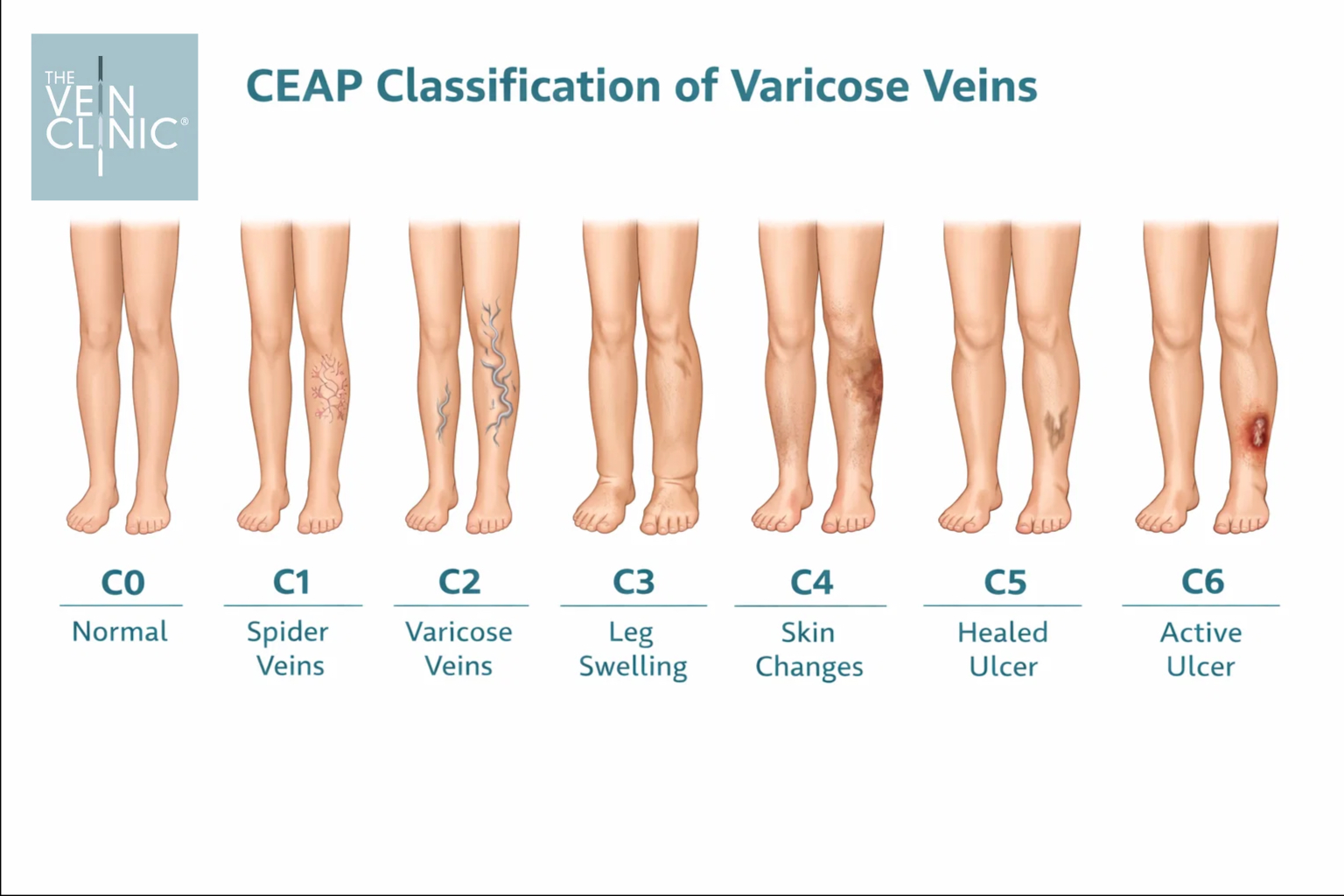
Doctors examine varicose veins using the CEAP classification, a bit like a grade card. Early stages involve visible veins and mild symptoms. As the condition progresses, swelling appears. Later stages involve skin darkening, eczema, or hardening. The most advanced stages involve healed or active ulcers. Most people who believe their veins are not “bad enough” are already in the middle stages without realising it. They may not have ulcers, but they may have swelling, skin irritation, or early colour changes that show the veins are under strain.
When Treatment Is Recommended
Treatment is recommended when varicose veins begin to affect daily life.
If your legs feel heavy, tired, or painful and there are swelling and skin changes visible, this is a sign that the veins are struggling. If swelling appears at the end of the day, it shows that pressure is building inside the leg. If the skin around the ankle begins to change colour, become dry, or develop eczema, this is a warning that the circulation is under strain. A history of phlebitis is another reason to consider treatment, as it shows that the veins are inflamed and at risk of further problems. A vein that has bled, even once, should always be assessed, as bleeding can recur and may be more severe next time. A wound that is slow to heal is also a sign that the circulation is compromised.These signs show that the veins are no longer coping with the pressure placed on them. Treatment at this stage is not cosmetic. It is preventative. It protects the skin, reduces symptoms, and stops the condition from progressing.
When Urgent Assessment Is Needed
There are times when varicose veins need prompt medical attention. A leg that suddenly becomes swollen, tight, or uncomfortable may be signalling a deeper problem. Sudden swelling on one side can indicate a clot and should be assessed quickly. A hot, red, painful lump along a vein may be phlebitis. While phlebitis is usually a superficial problem, it can sometimes be linked to deeper clots, so it is important to have it checked. Bleeding from a vein is another situation that requires urgent care. Even if the bleeding stops, the vein may reopen, and the pressure inside it can make the next bleed more severe.
Why Waiting Often Makes Things Worse
Varicose veins are a progressive condition. They do not repair themselves, and the valves do not recover once they have weakened. Without treatment, the pressure inside the veins increases over time. This leads to more swelling, more discomfort, and more skin changes. The skin around the ankle becomes fragile and more prone to injury. Phlebitis and vein bleeding can occur from small knocks. In some cases, the skin breaks down and forms an ulcer. Ulcers can take months to heal and often recur without a comprehensive leg ulcer assessment.
Minimally Invasive Vein Procedures
At The Vein Clinic Swindon, we use vascular ultrasound assessment to make an accurate venous reflux diagnosis. We offer all the minimally invasive treatments that seal faulty veins and restore a healthy circulation. These include endovenous laser therapy, Radiofrequency Ablation (RFA), foam sclerotherapy, and ambulatory phlebectomy. Each treatment is performed under local anaesthetic and allows you to walk immediately afterwards.
Modern procedures like Endovenous Laser Treatment (EVLT) use targeted heat to collapse and seal the faulty vein. This minimally invasive approach is highly effective for treating the underlying cause of venous reflux without the need for traditional surgery.
Compression stockings can help with symptoms, but they cannot repair damaged valves. They are often used as a temporary measure, but they are not a long‑term solution. Modern treatments offer a permanent fix by closing the faulty veins and redirecting blood into healthy ones.
Frequently Asked Questions
How do I know if my varicose veins are serious?
Severity is judged by symptoms and skin changes, not by how large the veins look. Aching, swelling, heaviness, itching, or colour changes around the ankle all suggest that the veins are affecting circulation.
Can varicose veins turn into a blood clot?
Varicose veins themselves do not cause deep vein thrombosis, but phlebitis can sometimes be linked to deeper clots. Any sudden swelling or a hot, tender lump should be assessed.
Will my varicose veins get worse if I leave them untreated?
Most varicose veins do progress over time. Symptoms become more noticeable, swelling increases, and the skin can become fragile. Early treatment prevents long‑term complications.
Do I need a scan before treatment?
A duplex ultrasound is essential because it shows which valves are not working and guides the correct treatment plan. Without a scan, treatment is guesswork.
Are my veins bad enough to treat, or should I wait?
If your veins cause discomfort, swelling, skin changes, phlebitis, or bleeding, they are already affecting your leg health. Treatment at this stage is preventative, not cosmetic.
Most people underestimate their varicose veins. They assume others have worse problems or that their symptoms are not serious enough. But veins are not judged by size. They are judged by what they are doing to your legs. If you have pain, swelling, skin changes, or simply want clarity, contact The Vein Clinic in Swindon to arrange a consultation with a consultant vascular specialist.
📩 Email Us
☏ Call Us
Return to THE VEIN CLINIC homepage